

Last updated: 6/27/2025
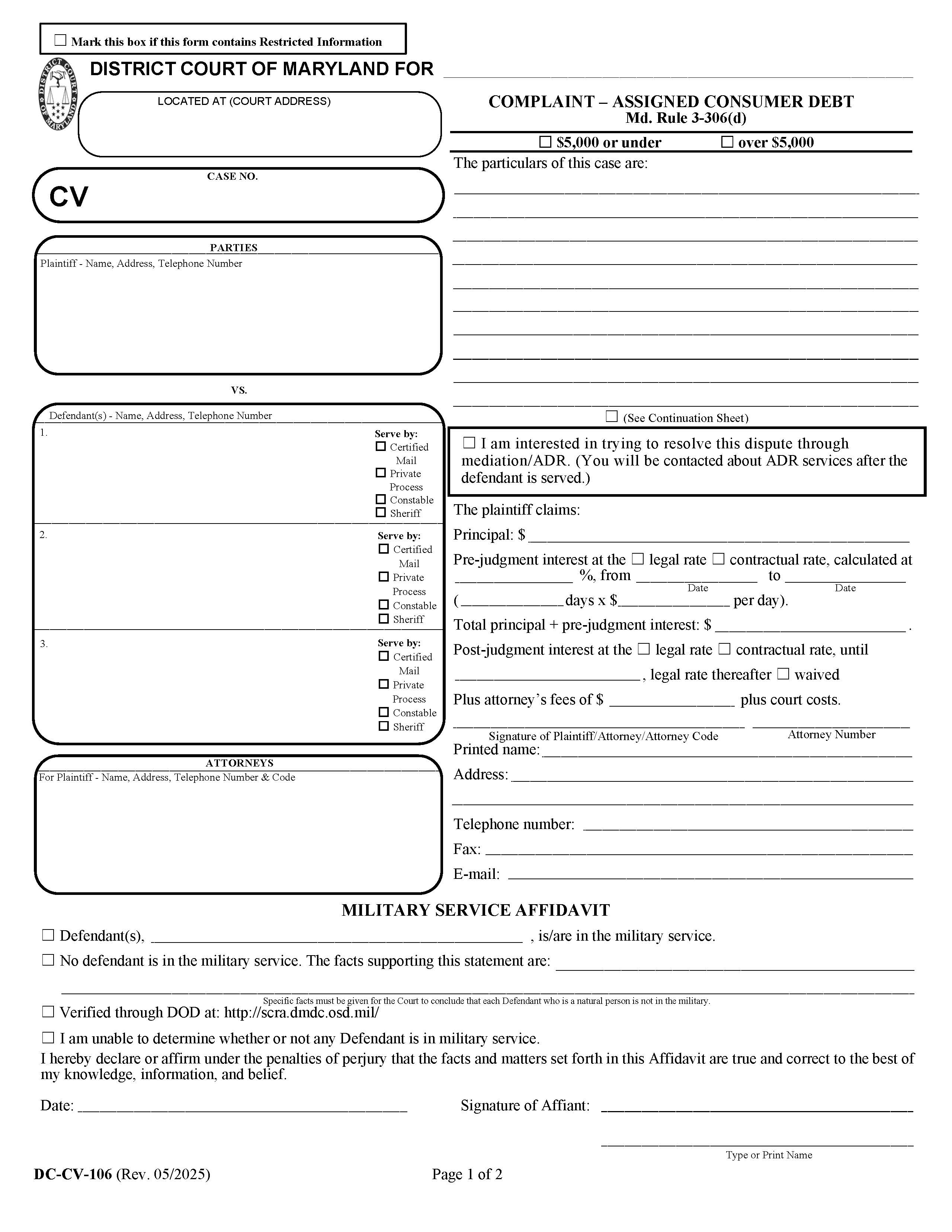
Complaint Assigned Consumer Debt {DC-CV 106}
Start Your Free Trial $ 15.99What you get:
- Instant access to fillable Microsoft Word or PDF forms.
- Minimize the risk of using outdated forms and eliminate rejected fillings.
- Largest forms database in the USA with more than 80,000 federal, state and agency forms.
- Download, edit, auto-fill multiple forms at once in MS Word using our Forms Workflow Ribbon

- Trusted by 1,000s of Attorneys and Legal Professionals
Description
DC-CV-106 - COMPLAINT – ASSIGNED CONSUMER DEBT Md. Rule 3-306(d). This form is used in the District Court of Maryland by a plaintiff (often a debt buyer or collection agency) to file a lawsuit against a consumer (defendant) for the recovery of a delinquent debt that has been assigned or transferred to them. This form, governed by Maryland Rule 3-306(d), allows the plaintiff to assert that they now own the debt originally owed to another party, and that the defendant is legally obligated to repay it. It includes detailed sections to identify the parties involved, specify the amount of money claimed (including principal, interest, attorney's fees, and court costs), and indicate the basis of the claim—such as credit card charges, loans, or unpaid utility bills. The form requires supporting documentation to be attached, including proof of the existence of the debt, terms and conditions of the original agreement, a verified chain of ownership showing how the debt was transferred from the original creditor to the plaintiff, and details about the nature of the account. It must also include a Military Service Affidavit, as required under federal law, to ensure the defendant’s rights under the Servicemembers Civil Relief Act (SCRA) are protected. This document serves both as a complaint and a summons. Upon filing, the court issues a summons requiring the defendant to appear in court and respond to the claims. If the defendant does not respond, a default judgment may be entered, potentially leading to wage garnishment, property liens, or other enforcement actions. The form also includes extensive notices to inform the defendant of their rights, legal options, and available resources, such as the Maryland Court Help Center. www.FormsWorkflow.com
Related forms
-

Maryland/Statewide/District Court/Civil/ -
Maryland/Statewide/District Court/Civil/ -
Maryland/Statewide/District Court/Civil/ -
Maryland/Statewide/District Court/Civil/ -
Maryland/Statewide/District Court/Civil/ -
Maryland/Statewide/District Court/Civil/ -
Maryland/Statewide/District Court/Civil/ -
Maryland/Statewide/District Court/Civil/ -
Maryland/Statewide/District Court/Civil/ -
Maryland/Statewide/District Court/Civil/ -
Maryland/Statewide/District Court/Civil/ -
Maryland/1 Statewide/District Court/Civil/ -
Maryland/1 Statewide/District Court/Civil/ -
Maryland/1 Statewide/District Court/Civil/ -
Maryland/Statewide/District Court/Civil/ -
Maryland/Statewide/District Court/Civil/ -
Maryland/Statewide/District Court/Civil/ -
Maryland/Statewide/District Court/Civil/ -
Maryland/Statewide/District Court/Civil/ -
Maryland/Statewide/District Court/Civil/ -
Maryland/Statewide/District Court/Civil/ -
Maryland/Statewide/District Court/Civil/ -
Maryland/Statewide/District Court/Civil/ -
Maryland/Statewide/District Court/Civil/ -
Maryland/Statewide/District Court/Civil/ -
Maryland/Statewide/District Court/Civil/ -
Maryland/Statewide/District Court/Civil/ -
Maryland/Statewide/District Court/Civil/ -
Maryland/1 Statewide/District Court/Civil/ -
Maryland/Statewide/District Court/Civil/ -
Maryland/Statewide/District Court/Civil/ -
Maryland/1 Statewide/District Court/Civil/ -
Maryland/Statewide/District Court/Civil/ -
Maryland/Statewide/District Court/Civil/ -
Maryland/Statewide/District Court/Civil/ -
Maryland/Statewide/District Court/Civil/ -
Maryland/1 Statewide/District Court/Civil/ -
Maryland/Statewide/District Court/Civil/ -
Maryland/Statewide/District Court/Civil/ -
Maryland/1 Statewide/District Court/Civil/ -
Maryland/Statewide/District Court/Civil/ -
Maryland/Statewide/District Court/Civil/ -
Maryland/Statewide/District Court/Civil/ -
Maryland/1 Statewide/District Court/Civil/ -
Maryland/Statewide/District Court/Civil/ -
Maryland/Statewide/District Court/Civil/ -
Maryland/Statewide/District Court/Civil/ -
Maryland/Statewide/District Court/Civil/ -
Maryland/Statewide/District Court/Civil/ -
Maryland/Statewide/District Court/Civil/ -
Maryland/Statewide/District Court/Civil/ -
Maryland/Statewide/District Court/Civil/ -
Maryland/Statewide/District Court/Civil/